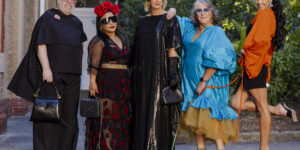

Since its launch in 2019, Melbourne-based volunteer nonprofit organisation Revival Runway has done its best to support the independent fashion industry with its range of activities like runway shows, editorial shoots, social media shoutouts and internships.
However, over the six years since, there have been a large number of brands that have closed down, or pivoted away from the core operation of creating garments.


Why does this matter? There are a number of reasons aside from the fact that we all love fashion and want to support local creatives. Those of us who love fashion want to have an industry that is culturally rich, economically diverse and innovative.
Unfortunately these closures signal a broader structural issue in the Australian fashion industry, in general, and that of Melbourne and Victoria, in particular. There is a misalignment between economic conditions, property and retail systems, consumer expectations and the realities of ethical, small-scale fashion production.
MELBOURNE’S FASHIONABLE HISTORY
Melbourne’s independent fashion scene developed out of the amazing cultural melting pot that was post-war Australian immigration. The Italian and Greeks brought European tailoring skills with them, instantly elevating the style and quality of Australian-made clothing, alongside others who brought the skills of factory production. Flinders Lane became the city’s ‘garment district’ (Alex from SGN, 2025). By the 1980s, other migrant groups like the Vietnamese brought intricate hand-beading and embroidery skills to the industry, alongside the workforce needed to expand the local industry (ABC Radio National, 2021; Museum Victoria, n.d.).


Also in the 1980s, organisations like the Fashion Design Council (FDC) started operating, focusing on supporting local creatives delving into art-fashion fusions. Launched in 1983, the FDC celebrated designers like Jenny Bannister and Sara Thorn, building up a local audience and customer base for Australian fashion design, moving away from the historical dependence on imported fashion from America and Europe (National Gallery of Victoria, 2015).
Melbourne Fashion Week (MFW) was launched in 1996, with the core of the brands featured being from the city or Australia. The stated aim was to introduce the public to the burgeoning local fashion industry as part of a “broader narrative of fashion’s cultural evolution in Melbourne” (State Library Victoria, 2022). There was also an economic angle to the concept with ‘runway-to-retail’ highlighted within the business community (CBD News, 2025).


From the 2000s onwards, the Melbourne fashion industry began to mature, refocusing on creating garments with links to cultural diversity integrating Indigenous artists, textiles from various African diaspora communities, upgraded technology and a new focus on sustainability (Melbourne Fashion Festival, 2024; Briggs-Houston, 2023; Woven Insights, 2025). Activism also became a part of the independent fashion scene particularly for the Queer community, moving from clothing to opportunities for meaningful expression (Transform Transwear, 2025 and (Abbotsford Convent, 2025).
During the same period, iconic retail outlets like the historic Georges and Christine Barro were also launched, introducing the populace to a wide range of styles, trends and fashion brands (May, 2008 and City of Melbourne, 2025).

Independent Melbourne fashion brand Meg Smith Makes. Image: Amelia Ourwerkerk
According to Tuite (2019), independent fashion is characterised by designer-led businesses that retain creative and economic autonomy, often operating on a small scale with close relationships to consumers and alternative production and retail models distinct from mass-market fashion systems. A number of Melbourne fashion brands that typify the ‘independent’ label include Kuwaii, With Harper Lu, Caves Collect, Maroske Peech, Perple, HB Archive, Alpha60 and Fernanda Covarrubias. Luckily, these brands are all still up and running.
Independent fashion brands are an integral part of a healthy fashion industry. These businesses support community identity, tend to use sustainable practices, and their wider economic circle supports other local creatives (Eckert, Crommentuijn-Marsh and Black, 2022).
THE SITUATION
Since 2019, Revival Runway has worked with or been in contact with 304 independent Australian fashion brands – the majority being from Melbourne and the state of Victoria. In December 2025, 69 of those brands had closed down, or pivoted away from creating garments. That is approximately 22.7% independent businesses, and their related workforces, suppliers and other relevant businesses have been economically affected.
So why have these fashion brands closed? The core reasons are rising costs, changing consumer behaviour, and slightly less critically, issues around cash flow and access to capital.
According to CBRE (2025), retail rents in Melbourne and the inner city areas have continued to rise in 2025, which impacts independent fashion brands which tend to operate on small margins. Hayton Kosky (2025) reported that a shopping precinct like High Street Armadale can cost up to $1,500–$2,000/m² per year in rent, which is as high as CBD rent, and is obviously too expensive for small fashion brands.


Other costs of doing business in Australia also impact on the ability of an independent fashion brand to succeed. The country’s large size and widely spaced communities, its distance from global manufacturing hubs and the high cost of transport, all impact the bottom line of small businesses (Australian Government, House of Representatives Standing Committee on Industry, Science and Resources, 2023 and IMARC Group, 2025).
When it comes to changes in consumer behaviour, post Covid-19 the population has rapidly taken to online shopping. According to Market Research Future (2025), online stores have grown more quickly than any other type of retail distribution channel. While many of the independent fashion brands were either already online, or moved online quickly, during the Covid-19 period, some of the more established brands were not able to move quickly enough (Demyen, 2024). Post-Covid, many new independent fashion brands have chosen to be ‘online-only’ or to use various shoppable social media platforms to generate revenue. However, only time will tell if these brands last longer than a few seasons (Elshaer, 2024).

Independent Melbourne fashion brand Madeleine McInnes. Image: Amelia Ourwerkerk
Another issue for independent fashion brands is the continued rise of ‘fast fashion’ outlets. In recent years Australia has been inundated by ‘ultra-fast fashion’ online outlets like Temu and Shein which proffer extremely cheap fashion items, super fast delivery and extensive aggressive marketing campaigns (Ainsworth, 2024). All of these things impact on the bottom line of small, independent fashion brands (ibid, 2024). According to a report in The Guardian (Tonti, 2024), recent years have seen a 30%+ increase in Australian shoppers using these two ultra-fast fashion outlets.
Finally, financial instruments like access to capital and cash flow are difficult for smaller, independent fashion brands (Williams, 2024). The previously highlighted issues like rising costs, changes in consumer behaviour and cheap alternatives, all mean that independent brands generally struggle with cash flow and long-term planning (Schulz, 2024; Williams, 2024).
THE NUMBERS
What are the facts and figures that independent fashion brands are dealing with? According to Kelly (2025), the state of Victoria has one of the highest numbers of retail insolvencies in the country. In FY25, these insolvencies increased year-on-year and reflected the increased pressure on all small retailers, including independent fashion brands (Kelly, 2025).


Additionally, Australian Bureau of Statistics (ABS) data for 2024-25 has shown an increased rate of retail closures across Victoria, leading to a net contraction in business (Australian Bureau of Statistics, 2025a). The report showed that there are more small, owner-operator businesses ie. independent fashion brands, closing than larger businesses, particularly those that had a bricks ‘n’ mortar retail presence (ibid, 2025). Another ABS report showed that while there was some growth over this period, the growth was very unevenly distributed (Australian Bureau of Statistics, 2025b) .
All of these issues are the reasons why around 23% of the brands Revival Runway has worked with since 2019, have closed down or pivoted away from garment production. So, what can be done?
WHAT NEEDS TO BE DONE
Although there are a variety of government instruments that are designed to reduce operating costs for small businesses, many independent fashion brands miss out on these forms of targeted relief and incentives. Energy Bill Rebates and other small business reliefs exist but things like rent relief and creative workspace subsidies do not (Australian Government, 2025a). A small creative business does not benefit from traditional tax-incentives like the R&D Tax Incentive, for example, which only subsidises research rather than creative production and retail operations (Australian Government, 2025b).
Likewise, the Australian Fashion Council’s 2022 pre-budget submission highlighted a major need for localised manufacturing investment and additional on-shore capability support, however despite a manufacturing roundtable in Victoria showing some government engagement in the issue, there has not been a formal policy response about this issue (Australian Fashion Council, 2025).
However, there has been a regional response to some of these issues; it’s not all bad.

Independent Melbourne fashion brand Yanggurdi. Image: Amelia Ourwerkerk
The Victorian Government does have a Creative Industry Strategy. This covers a series of goals designed to “strengthen and grow Victoria’s creative section” and offers suggestions that include job creation and economic support (Creative Victoria, 2025). In 2023, the government announced the Sustaining Creative Workers programme which offered grants for micro-organisations, sole traders and freelancers in the creative industries, which was helpful but didn’t include larger businesses or covering wider business costs (Business Victoria/Regional Arts Victoria, 2023).
The Creative Projects Fund, which offers support for projects led by small creative organisations and micro-businesses, does offer creative activity funding for a specific project but does not help with longer-term infrastructure or support for operating costs (Creative Victoria, 2025b). The Creative Enterprises Programme, which does offer funding for growth and organisational capacity, is a competitive funding programme specifically aimed at improving creative organisations’ operations (Creative Victoria, 2021).

Independent Melbourne fashion brand Yanggurdi. Image: Amelia Ourwerkerk
Small Business Victoria is a government portal that offers various support services including business tools and guidance about grants, as well as some practical support around general business issues like planning, compliance, growth and cash flow (Small Business Victoria, 2025). All of these things can be helpful for independent fashion brands, but they do not necessarily solve the specific problems that have been leading to their closures.
WHERE TO FROM HERE?
While all of this might imply that it is all over for the independent fashion brands, there are many individuals and organisations working hard to make sure not only more brands stay in business, but also that new independent brands can be launched and succeed.
Melbourne Fashion Week aims to support local designers by investing in initiatives that highlight Victorian and Melbourne-based designers and brands (City of Melbourne, 2025). Melbourne Fashion Hub, an independent fashion business incubator and mentoring programme supports emerging designers through mentorship, business training and pop-up fashion retail events. It is a community-focused model that works to eliminate traditional retail barriers (Melbourne Fashion Hub, 2025).
Melbourne’s robust Market industry which ranges from the Queen Victoria Market with 600 stalls selling clothing and handmade accessories, to small, monthly suburban and regional town markets, have become showcases for the independent fashion community (Herald Sun, 2025).
There are other things that are creating a more positive environment for independent fashion brands. Consumers are more interested in sustainable fashion and more ethical practices in manufacturing, both of which tie-in neatly with the general business practices of independent fashion brands (Swinburne University of Technology, 2025). Sustainability is also being supported by the Victorian Government via plans to create infrastructure for circular design at scale with funding and information for local designers with the aim to improve sustainable production and consumption of textiles (Sustainability Victoria, 2025). Likewise, relevant education and skills are also being cultivated to assist with developing repair, resale and sustainable processes at various training facilities like TAFE (State Government of Victoria, 2024).
Happily, some consumers are also becoming more attuned to the benefits of supporting — buying and wearing — clothes from independent fashion designers and brands. During the 2024 Melbourne Fashion Week a series of discussions highlighted a move towards values-driven purchasing, a love of pre-loved fashion and a desire to have a personal connection with the brands they wore (Sousa, 2024).
So, while there have been some casualties, there are still many fantastic independent fashion brands offering clothes that are beautifully, original, creative and sustainably made that are definitely worth investing in.
REFERENCE LIST
Abbotsford Convent (2025) QUEER BY DESIGN fashion show, Abbotsford Convent, 19 February. Available at: https://abbotsfordconvent.com.au/event/queer-by-design-fashion-show-2/ (Accessed: 22 December 2025).
ABC Radio National (2021) The stories of Australia’s Vietnamese garment outworkers, Blueprint for Living, 21 May. Available at: https://www.abc.net.au/listen/programs/blueprintforliving/working-from-home-may-o-nha-emma-do-kim-lam/13352102 (Accessed: 22 December 2025).
Ainsworth, K. (2024) Shein and Temu are unstoppable forces in online retail. Are Australian businesses under threat?, ABC News, 7 March. Available at: https://www.abc.net.au/news/2024-03-08/rise-of-shein-temu-effect-on-australian-retail-ecommerce-future/103546188 (Accessed: 22 December 2025).
Alex from SGN (2025) Melbourne fashion scene: Style capital of Australia’s creative expression, MLifeOn – Lifestyles Magazine, 14 August. Available at: https://mlifeon.com/en/articles/melbourne-fashion-scene-style-capital-australia-creative-expression/ (Accessed: 22 December 2025).
Australian Bureau of Statistics (2025a) Counts of Australian businesses, including entries and exits, July 2021–June 2025, ABS, 16 December. Available at: https://www.abs.gov.au/statistics/economy/business-indicators/counts-australian-businesses-including-entries-and-exits/latest-release (Accessed: 22 December 2025).
Australian Bureau of Statistics (2025b) Retail trade, Australia, May 2025, ABS, 10 July. Available at: https://www.abs.gov.au/statistics/industry/retail-and-wholesale-trade/retail-trade-australia/may-2025 (Accessed: 22 December 2025).
Australian Fashion Council (2025) Advocating for local manufacturing: 2024 wrap-up, Australian Fashion Council, 15 January. Available at: https://ausfashioncouncil.com/news/advocating-for-local-manufacturing-2024-wrap-up/ (Accessed: 22 December 2025).
Australian Government (2025a) Albanese Labor Government backing small businesses, Media release, 25 March. Available at: https://ministers.treasury.gov.au/ministers/julie-collins-2024/media-releases/albanese-labor-government-backing-small-businesses (Accessed: 22 December 2025).
Australian Government (2025b) Research and Development Tax Incentive overview, Business.gov.au. Available at: https://business.gov.au/grants-and-programs/research-and-development-tax-incentive/overview-of-rd-tax-incentive (Accessed: 22 December 2025).
Australian Government, House of Representatives Standing Committee on Industry, Science and Resources (2023) Advanced manufacturing: Australia in the global manufacturing landscape, Parliament of Australia, Canberra. Available at: https://www.aph.gov.au/Parliamentary_Business/Committees/House/Former_Committees/Industry_Science_and_Resources/Completed_Inquiries_of_the_47th_Parliament/AdvancedManufacturing/Report/Chapter_2_-_The_Australian_and_international_landscape (Accessed: 22 December 2025).
Briggs-Houston, L. (2023) First Nations self-determination in fashion, Common Ground Australia, 14 June. Available at: https://www.commonground.org.au/article/first-nations-self-determination-in-fashion (Accessed: 22 December 2025).
Business Victoria/Regional Arts Victoria (2023) Sustaining Creative Workers, Business Victoria, 15 February. Available at: https://business.vic.gov.au/grants-and-programs/sustaining-creative-workers (Accessed: 22 December 2025).
CBRE (2025) Melbourne retail figures Q2 2025, CBRE, 9 July. Available at: https://www.cbre.com.au/insights/figures/melbourne-retail-figures-q2-2025 (Accessed: 22 December 2025).
City of Melbourne (2025a) Melbourne shops supporting local female designers, What’s On Melbourne, 2 October. Available at: https://whatson.melbourne.vic.gov.au/article/melbournes-best-shops-for-female-makers (Accessed: 22 December 2025).
City of Melbourne (2025b) Melbourne Fashion Week, City of Melbourne. Available at: https://www.melbourne.vic.gov.au/melbourne-fashion-week (Accessed: 22 December 2025).
Creative Victoria (2021) Creative Enterprises Program, Creative Victoria, 12 August. Available at: https://creative.vic.gov.au/funding-opportunities/find-a-funding-opportunity/creative-enterprises (Accessed: 22 December 2025).
Creative Victoria (2025a) Creative State 2028: Creating together for a growing Victoria, Creative Victoria, 1 December. Available at: https://creative.vic.gov.au/about/our-strategy (Accessed: 22 December 2025).
Creative Victoria (2025b) Creative Projects Fund, Creative Victoria. Available at: https://creative.vic.gov.au/funding-opportunities/find-a-funding-opportunity/creative-projects-fund (Accessed: 22 December 2025).
Demyen, S. (2024) ‘The online shopping experience during the pandemic and after — A turning point for sustainable fashion business management?’, Journal of Theoretical and Applied Electronic Commerce Research, 19(4), pp. 3632–3658. https://doi.org/10.3390/jtaer19040176
Eckert, C., Crommentuijn-Marsh, P. and Black, S. (2022) ‘The role of networks in supporting micro- and small-sized sustainable fashion businesses’, Sustainability: Science, Practice and Policy, 18(1), pp. 544–559. https://doi.org/10.1080/15487733.2022.2097772
Elshaer, I.A. (2024) ‘Social commerce and buying intention post COVID-19’, Journal of Retailing and Consumer Services, 81, 103203. Available at: https://www.sciencedirect.com/science/article/abs/pii/S0969698923002990 (Accessed: 22 December 2025).
Hayton Kosky (2025) Melbourne retail strip centres (within 10km): 10-year trends & current state introduction, Hayton Kosky, 16 May. Available at: https://haytonkosky.com.au/melbourne-retail-strip-centres-within-10km-10-year-trends-current-state-introduction/ (Accessed: 22 December 2025).
Herald Sun (2025) Queen Victoria Markets: More than 600 small businesses can show you how to level up your wardrobe, Herald Sun, 15 August. Available at: https://www.heraldsun.com.au/news/victoria/queen-victoria-markets-more-than-600-small-businesses-can-show-you-how-to-level-up-your-wardrobe/news-story/b33440901ff6dd2652f30cb4875348d9 (Accessed: 22 December 2025).
IMARC Group (2025) Australia fashion and apparel market size, share, trends and forecast by type, distribution channel, end user, and region, 2026–2034, IMARC Group. Available at: https://www.imarcgroup.com/australia-fashion-apparel-market (Accessed: 22 December 2025).
Kelly, C. (2025) Retail trade insolvencies surpass 1,000 in FY25, Ragtrader, 23 July. Available at: https://www.ragtrader.com.au/news/retail-trade-insolvencies-surpass-1-000-in-fy25 (Accessed: 22 December 2025).
Market Research Future (2025) Australia clothing market – forecast to 2035: Market size, industry trends, growth analysis, Market Research Future, October. Available at: https://www.marketresearchfuture.com/reports/australia-clothing-market-16150 (Accessed: 22 December 2025).
May, A. (2008) ‘Georges’, eMelbourne: The Encyclopedia of Melbourne Online, School of Historical & Philosophical Studies, The University of Melbourne. Available at: https://www.emelbourne.net.au/biogs/EM00638b.htm (Accessed: 22 December 2025).
Melbourne Fashion Festival (2024) Global Indigenous Runway: Celebrating First Nations fashion and culture, Melbourne Fashion Festival News, 8 April. Available at: https://melbournefashionfestival.com.au/news/independent-runways-highlights (Accessed: 22 December 2025).
Melbourne Fashion Hub (2025) Melbourne Fashion Hub home page, Melbourne Fashion Hub. Available at: https://melbournefashionhub.com.au/ (Accessed: 22 December 2025).
Museum Victoria (n.d.) Migration from Vietnam, Origins – History of Immigration in Victoria. Available at: https://origins.museumsvictoria.com.au/countries/vietnam/ (Accessed: 22 December 2025).
National Gallery of Victoria (2015) 200 years of Australian fashion, Media release, 3 December. Available at: https://www.ngv.vic.gov.au/media_release/200-years-of-australian-fashion/ (Accessed: 22 December 2025).
Schulz, M. (2024) As the indie designer dominos fall, who’s going to step in to help fashion brands?, Vogue Business, 24 May. Available at: https://www.voguebusiness.com/fashion/as-the-indie-designer-dominos-fall-whos-going-to-step-in-to-help-fashion-brands (Accessed: 22 December 2025).
Small Business Victoria (2025) How we support small business, Victorian Small Business Commission. Available at: https://www.vsbc.vic.gov.au/guidance/how-we-support-small-business/ (Accessed: 22 December 2025).
Sousa, M. (2024) ‘Vibe check: What’s it like to be an Australian fashion business right now?’, Fashion Journal, 30 October. Available at: https://fashionjournal.com.au/fashion/australian-fashion-business/ (Accessed: 22 December 2025).
State Government of Victoria (2024) Fashion and textiles — Training for the clean economy, Victoria State Government, 8 April. Available at: https://www.vic.gov.au/training-clean-economy-sector/textiles (Accessed: 22 December 2025).
State Library Victoria (2022) From flappers to fast fashion: 100 years of style in Melbourne, SLV Blog, 4 June. Available at: https://blogs.slv.vic.gov.au/our-stories/ask-a-librarian/100-years-of-winter-fashion/ (Accessed: 22 December 2025).
Sustainability Victoria (2025) Circular design at scale: a guide for fashion designers and industry, Sustainability Victoria, 4 March. Available at: https://www.sustainability.vic.gov.au/news/news-articles/circular-design-at-scale-a-guide-for-fashion-designers-and-industry (Accessed: 22 December 2025).
Swinburne University of Technology (2025) 57 per cent of Australians willing to pay more for sustainable clothing, Scimex News, 18 November. Available at: https://www.scimex.org/newsfeed/57-percent-of-australians-willing-to-pay-more-for-sustainable-clothing-new-swinburne-research-finds (Accessed: 22 December 2025).
Tonti, L. (2024) ‘“Quite dodgy”: what kind of outfit does $80 buy at Temu and Shein?’, The Guardian, 20 November. Available at: https://www.theguardian.com/lifeandstyle/2024/nov/20/fast-fashion-outfits-temu-shein (Accessed: 22 December 2025).
Transform Transwear (2025) Queer fashion through the decades: A history of expression and resistance, Transform Transwear, February. Available at: https://www.transformtranswear.com.au/blogs/news/queer-fashion-through-the-decades-a-history-of-expression-and-resistance (Accessed: 22 December 2025).
Tuite, A. (2019) ‘What is independent fashion? An Australian perspective’, Fashion Practice, 11(1), pp. 5–25. https://doi.org/10.1080/17569370.2019.1565368
Williams, S. (2024) Independent fashion brands struggle post-COVID: Closures, challenges, and the path forward, Sable L. Williams, 2 June. Available at: https://sablelwilliams.com/articles/independent-fashion-brands-struggle-post-covid (Accessed: 22 December 2025).
Woven Insights (2025) Overview of the Australian fashion industry, Woven Insights, 21 February. Available at: https://woveninsights.ai/site-blog/overview-of-the-australian-fashion-industry/ (Accessed: 22 December 2025).